
Secchi Disk monitoring for water quality
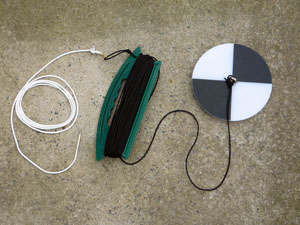
The Friends of Gulf St Vincent, in collaboration with the Adelaide and Mount Lofty NRM Board, began to monitor water quality in April 2012 at several Adelaide metropolitan jetties using Secchi disks. They are a relatively simple and inexpensive way to measure water clarity – the black and white disc is lowered into the water until it is no longer visible. This distance is the Secchi depth. The rule of thumb is that if you can’t see your feet when you are standing in chest-deep water it is not safe to go swimming.
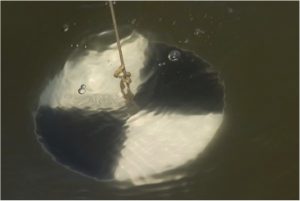
FoGSV used Secchi disks to collect water quality data for many years but funding was eventually withdrawn as more accurate measuring methods had become available. However, Secchi disks are still an easy way for volunteers to get involved in citizen science to measure water clarity and hence pollution loads in the water we like to swim in. FoGSV has started monitoring again with a few keen volunteers and would like to monitor not just from metropolitan jetties but also on the Yorke Peninsula side of the gulf to get a bigger picture - if we can sign up Secchi volunteers there.
FoGSV will provide a Secchi kit and training to volunteers. The goal is to get one or more people collecting data (taking measurements and then submitting it via the Secchi Project website) from their local jetties or boats. Volunteers need to have safe access to a relatively deep measuring location. Secchi readings should ideally be taken regularly (once a week would be great) but all data collected will be useful!
If you are interested in participating in this project, or if you know of someone who might be, please contact Peter at friendsofgulfstvincent@gmail.com
See our monitoring manual and data sheet below:
Secchi Disk manualFOGSV_2017v4_780KB
Secchi Disk Monitoring videos
There is also a promotional film and a detailed instructional video on YouTube.
Interesting trends
In Gulf St Vincent the Secchi depth is usually between 2 and 10 metres, but in other parts of the world measurements of 40 – 80 metres have been recorded!
Secchi Depths around the Gulf in the past ranged from a very low 70cm at Henley Beach up to 730cm at Port Noarlunga where waters are generally less turbid. A Secchi Depth of 1.2m or less is considered unsafe for swimming yet several readings around the Gulf were below that level. Hence starting to record Secchi Disc levels again may be an important contribution to our understanding and awareness of the water quality in the Gulf.
An example of readings taken for Brighton:

The more data we can collect, the more rigorous it will be and the more information we can provide to decision makers and the community.
Measuring water quality – the Secchi Project
People who observe our coastal waters regularly can’t help but notice when they are dirty. In most cases it is possible to make a good guess as to why. Near Adelaide, stormwater is a likely culprit, and we have become accustomed to seeing murky water after rainy and windy conditions. Other causes may include dredging operations, runoff from building sites or agricultural land, waste spills etc.
The Adelaide Coastal Waters Study highlighted the importance of clean water for a healthy marine environment, particularly in relation to seagrasses, which play such a pivotal role in the gulf.
The waters extending from Outer Harbour to Port Stanvac are particularly at risk from turbidity (muddy waters), but we also need to monitor coastal waters at all jetties around the gulf, so that we can identify marine areas that may be affected by turbidity now, and those which may be at risk in the future, also locations where local pollution of lakes and bays is causing concern. The benefits are that people become involved in regular observation of changes in the water quality, the data provides a baseline and record of trends and we all learn more about the sources and impacts of pollution.